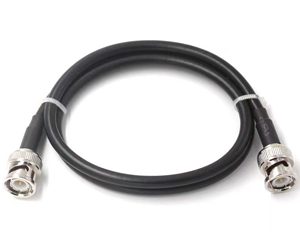
In modern communication technology, radio frequency (RF) cables play an essential role, acting as the key component connecting wireless devices to signal sources. RG58 cable, as a widely used RF coaxial cable, has been applied across various fields for its exceptional performance and reliability.
What is RG58 Coax Cable
RG stands for Military Standard (MIL-STD), which defines a series of specifications for RF coaxial cables. These cables are extensively used for transmitting RF signals, such as in radio communications, cable television, certain types of Ethernet, and a variety of electronic test equipment. The number following “RG” typically indicates a specific type of cable, like RG58, RG59, RG6, etc., each with its unique electrical characteristics and applications.

Advantages and Features
- Cost-Effective: As an economical RF cable, RG58 is relatively inexpensive.
- Flexibility: It’s soft and easy to bend, making installation and wiring convenient.
- Wide Application: Suitable for a range of communication and test equipment, including wireless networks and security systems.
- Electrical Performance: Characterized by a 50Ω impedance, with a frequency range from DC to 1GHz.
- Physical Properties: Lightweight (approximately 3.7kg per 100 meters), with a small minimum bending radius (25mm).
- Environmental Adaptability: Operates over a wide temperature range, from -25℃ to +75℃.
- Shielding Effectiveness: Provides good shielding against external electromagnetic interference.
- Voltage Resistance: Can withstand a maximum working voltage of 5000V.
- Attenuation Performance: At 100MHz frequency, the typical attenuation value is 0.17dB/m.
Construction and Materials
- Conductor Material: The central conductor of RG58 cable is typically made of copper or copper-plated steel wire to ensure good conductivity and signal transmission.
- Insulation Material: The insulating layer is usually made of polyethylene or polytetrafluoroethylene (PTFE), which offer excellent dielectric properties and chemical stability.
- Shielding Layer: The shielding layer consists of braided copper wires or aluminum foil to prevent external electromagnetic interference from affecting signal transmission.
- Jacket: The jacket is made of polyvinyl chloride (PVC) or low smoke zero halogen (LSZH) material, providing physical protection and environmental sealing.
Applications
- Wireless Communications: Connects wireless network devices and antennas, supporting high-speed data transmission.
- Security Systems: Transmits video signals in closed-circuit television (CCTV) and security monitoring systems.
- Home Automation: Connects smart home devices for home automation control.
- Automotive Wiring Harness: Used for signal transmission in sensors, control systems, and entertainment systems in automobiles.
- Testing and Measurement: Serves as a connection cable in electronic test equipment for precise data acquisition and transmission.
- Consumer Electronics: Connects various consumer electronics, such as wireless headphones, speakers, etc.
- Aerospace: Used for transmitting critical control and communication signals in the aerospace sector.
- Medical Systems: Transmits ultrasound images and other medical monitoring data in medical equipment.
- Base Station Communications: Connects base stations with communication equipment for stable data and signal transmission.
RG58 cable has been widely used in these fields due to its excellent electrical performance, flexibility, and cost-effectiveness. Its design complies with MIL-STD standards, with a maximum operating frequency of 1GHz, making it suitable for a variety of high-speed, high-precision data transmission needs.

How to Choose the Right RG58 Coax Cable
- Frequency Range: Ensure the cable supports the performance within the frequency range of the application; RG58 is typically suitable for DC to 1GHz.
- Impedance: The standard impedance of RG58 cable is 50 ohms; impedance matching is crucial for reducing signal reflection and ensuring maximum power transfer.
- Attenuation: Attenuation is the loss of signal as it travels through the cable. Consider the required attenuation level when selecting a cable; RG58’s typical attenuation values range from 0.17dB/m to 0.69dB/m, depending on frequency.
- Bend Radius: Consider the minimum bend radius of the cable to ensure it’s not damaged or its performance affected during installation.
- Environmental Conditions: Including temperature range, UV exposure, humidity, chemical corrosion, etc., all of which can impact the cable’s performance and lifespan.
- Shielding Effectiveness: Good shielding reduces external electromagnetic interference; RG58 cables typically offer high shielding effectiveness, usually greater than 40dB (up to 1GHz).
- Connector Type: Choose the appropriate connector type, such as BNC, N-type, etc., to ensure compatibility with equipment.
- Physical Characteristics: Including the weight, outer diameter, and flexibility of the cable, which are essential for its installation and use.
- Compliance and Standards: Ensure the cable meets relevant industry standards and certifications, such as RoHS, MIL-STD, etc.
- Manufacturer Reputation: Opt for a reputable manufacturer to ensure the quality and performance of the cable.
RG58 cable has proven its importance in the field of RF communication with its excellent performance and wide range of applications. As technology continues to advance, we can expect RG58 cables to play an even greater role in future applications. Vinstronics is a leading microwave technology company, offering high-quality RF cables, RF connectors, and adapters. Please Contact Us if you need any assistance.
FAQs
Q: What is the difference in impedance between RG58 and RG59 cables?
A: RG58 cable has an impedance of 50 ohms, while RG59 cable has an impedance of 75 ohms. This difference means RG58 might be more effective in signal transmission, especially when matching the impedance of specific equipment.
Q: Can RG6 replace RG58?
A: Although RG6 and RG58 are similar in physical size, they are not interchangeable. RG6 has a 75-ohm impedance, while RG58 has a 50-ohm impedance. Mismatched impedance can lead to signal reflection and power loss. Moreover, RG6 is typically used for higher frequency applications.
Q: What types of connectors are suitable for RG58 RF cables?
A: RG58 RF cables are commonly used with BNC, SMA, MCX, and other types of connectors suitable for various RF applications.
Q: Is RG58 RF cable suitable for high-power applications?
A: RG58 cable is designed for low-power signal and RF connections and is not ideal for high-power applications. For such applications, more robust cables like RG213 might be considered.
Q: Is LMR 400 the same as RG58?
A: LMR-400 and RG58 are similar in some aspects, such as both having a 50-ohm impedance, but LMR-400 usually offers lower signal loss and better shielding, making it more favorable for applications requiring low loss and high shielding.