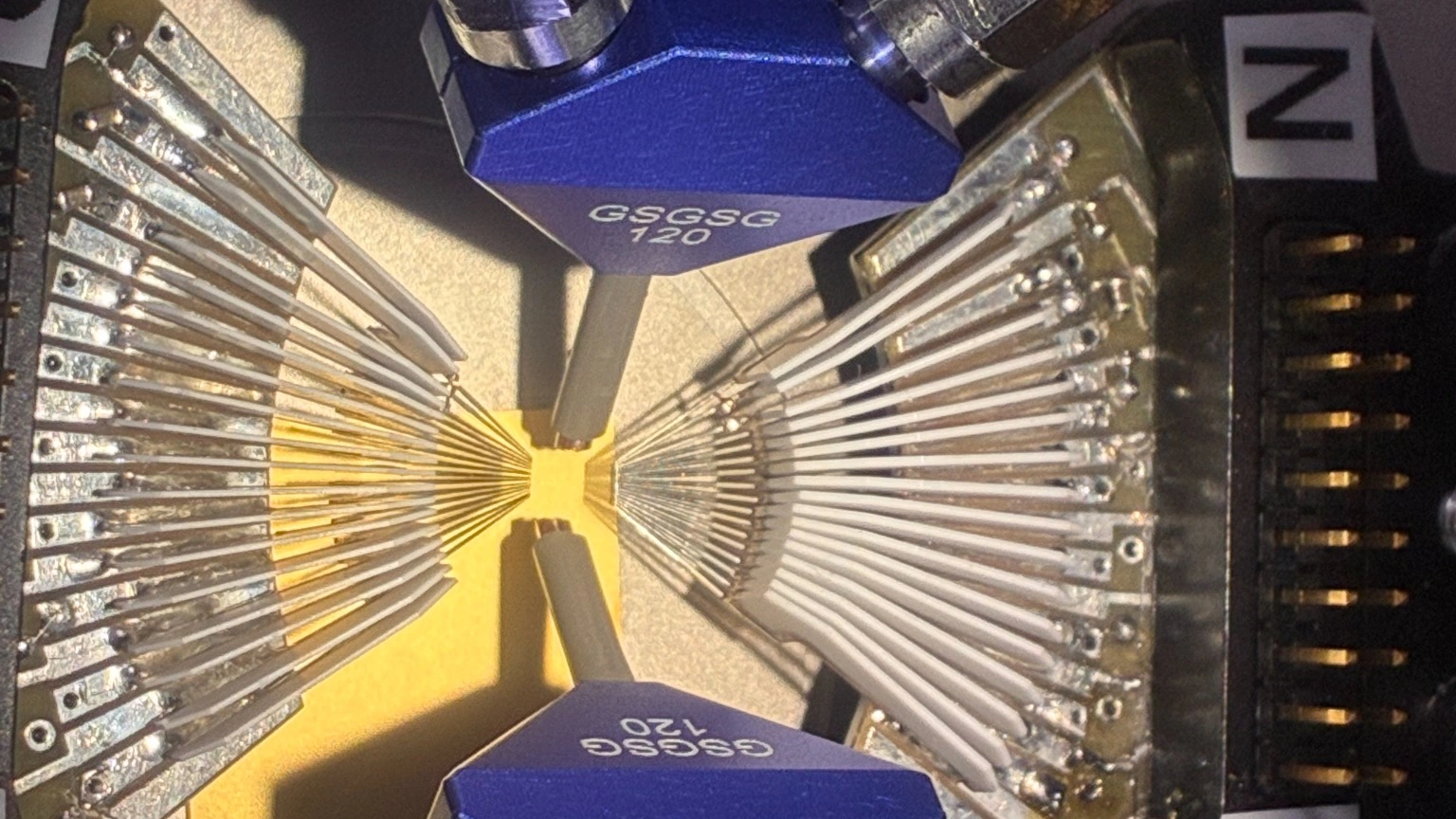
In the realm of radio frequency (RF) testing, the Ground-Signal-Ground (GSG) probe stands out for its critical role in ensuring signal integrity and precision. This brief introduction will delve into the features, applications, and significance of GSG probes in the ever-evolving landscape of high-frequency testing and technology.
What is GSG Probe
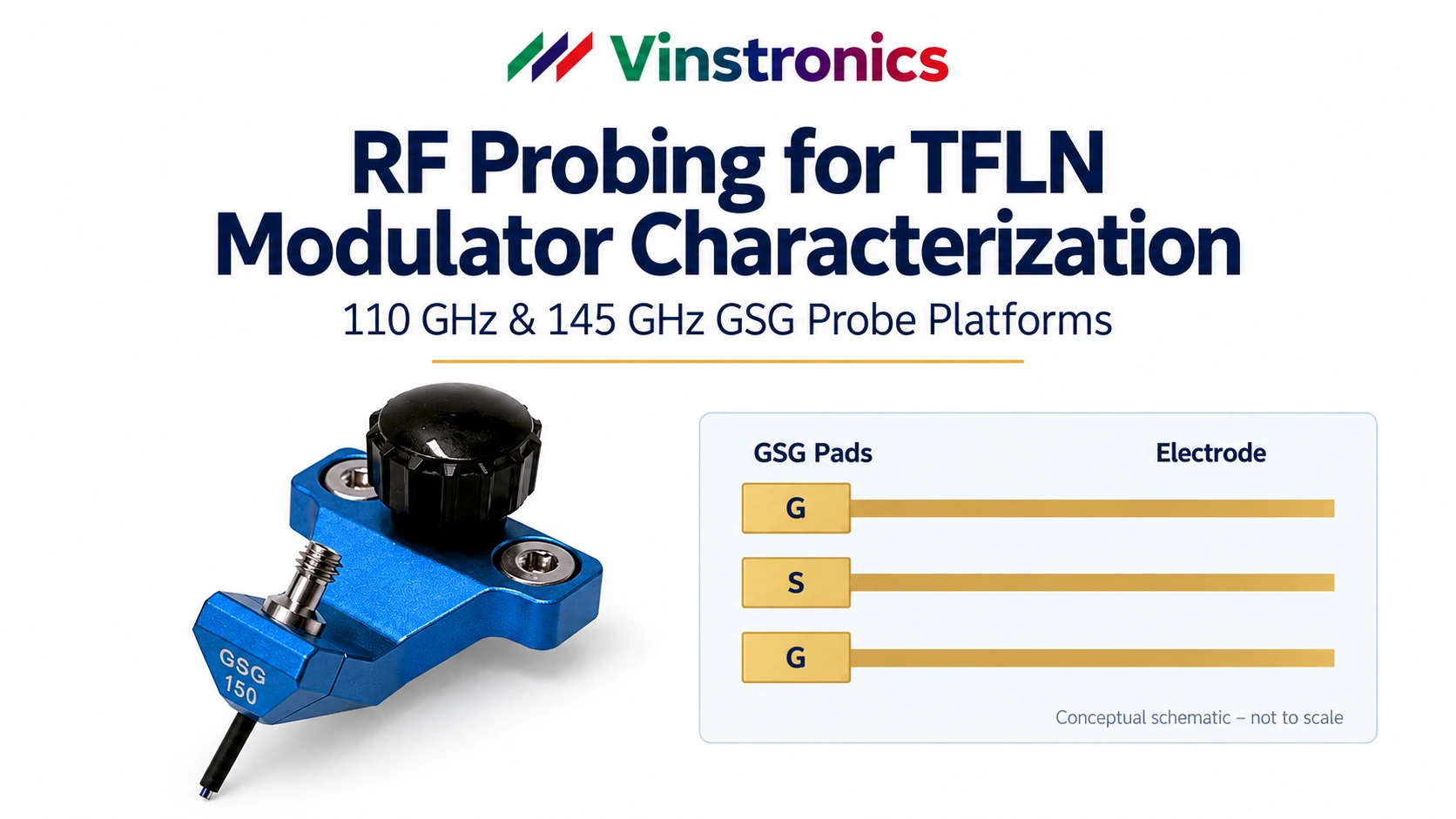
The GSG Probe, or Ground-Signal-Ground probe, is a type of probe commonly used in radio frequency (RF) testing. It’s designed with three pins: two ground pins (G) and one signal pin (S). This configuration provides excellent signal isolation and grounding, which is crucial for maintaining signal integrity during high-frequency testing.

Characteristics
- Three-Pin Design: The GSG probe’s three-pin setup offers stable signal transfer and grounding during testing, especially important for high-frequency signals.
- Precision Planarization: Due to manufacturing and installation errors, the three pins of a GSG probe may not be perfectly aligned with the wafer, requiring precision planarization before RF testing to ensure reliable results.
- Force Model: The force model of the GSG probe during contact and separation is derived from real-time force and electrical data analysis, aiding in automatic probe planarization.
- DC Test System: By setting up a DC test system, the relationship between probe angle, resistance, and voltage is studied, leading to a high-precision measurement method for probe angles.

Applications
- Semiconductor Production Testing: GSG probes are an integral part of wafer testing, helping to reduce or eliminate defective products from moving to the next production stage, saving time and money.
- RF and Microwave Module Testing: GSG probes are suitable for signal insertion, detection, and measurement output in RF and microwave modules, as well as for electrical performance analysis of high-frequency circuit boards.
- High-Speed Digital Circuit Analysis: GSG probes also play a significant role in high-speed digital circuit analysis, especially within the DC to 40 GHz frequency range.
- Wireless Application Development: GSG probes are used in the development of components for commercial wireless applications like WiFi, Bluetooth, and 3G/4G, as well as in student education.
- Device and IC Characterization: GSG probes are suitable for probing small pads, offering long probe life and low cost of ownership, making them ideal for device and IC characterization, with frequencies up to 110 GHz.

GSG probes play a vital role in the field of RF testing due to their unique design and high precision requirements. As technology advances, the applications of GSG probes continue to expand to meet the growing testing demands.
Vinstronics is a leading manufacturer of RF microwave components in China, providing high-quality RF connectors, RF adapters, RF loads, attenuators, RF cable assemblies, RF probes and other products. We provide high performance RF probes, including GS, GSG, GSSG, and GSGSG, DC to 110GHz. If you need, please contact us.
FAQs
What is the main advantage of using a GSG probe?
The main advantage is the excellent signal isolation and grounding provided by the three-pin design, which is essential for maintaining signal integrity in high-frequency testing.
How does precision planarization affect GSG probe performance?
Precision planarization ensures that the probe pins are perfectly aligned with the wafer, which is crucial for obtaining reliable and accurate test results.
In which industries is the GSG probe commonly used?
GSG probes are commonly used in semiconductor production, RF and microwave module testing, high-speed digital circuit analysis, wireless application development, and device and IC characterization.
What is the frequency range for GSG probes?
GSG probes can operate within a wide frequency range, from DC to 110 GHz, depending on the specific application and probe design. For example, the 2.92mm Female interface is 40GHz, the 1.85mm Female interface is 67GHz, and the 1.0mm Female interface is 110GHz.