
VXS Series · PUR Jacket · Up to 18 GHz
Flexible Low Loss Cable
Highly flexible PUR-jacketed 50Ω cables for dynamic routing and movement-sensitive RF systems.
Engineered to balance controlled attenuation with practical routing softness. The VXS series is selected when standard flexible cable lacks the required signal performance, but larger low-loss platforms are too rigid for the installation envelope.
What is Flexible Low Loss Cable?
A 50Ω cable family providing lower attenuation than general flexible cable while remaining softer and easier to route than larger low-loss constructions. Intended for installed RF paths where both signal control and handling matter.
What Makes VXS Different?
The VXS Series utilizes a PUR jacket rather than FEP, making it optimal for dynamic routing and repeated movement. It is specified when mechanical flexibility is the primary design filter within a -55°C to +85°C window, whereas the VXL series serves higher-temperature, transmission-focused paths.
Why Choose This Family?
Lower Loss with Softer Routing
Chosen when standard flexible cable is too lossy but larger low loss cable is harder to route.
PUR Jacket for Dynamic Handling
PUR jacket supports practical routing, abrasion resistance, and repeated movement in real equipment.
Smaller Bend Envelope Than Larger Low Loss Platforms
Provides a relative routing advantage in tighter installation envelopes where the layout cannot accommodate the minimum bend radius of larger, stiffer constructions.
Assembly-Ready for Mobile and Compact RF Systems
Engineered for real routed assemblies. Works reliably in compact RF integration and movement-sensitive installed systems where loss and cable handling must be balanced.
Model Performance Overview
Screen the VXS series by attenuation, diameter, bend planning, and dynamic handling before moving into detailed assembly definition.
Reference Attenuation Comparison
Published flexible cable attenuation (dB/100m) across representative frequencies.
Better when routed space is tighter and the design needs a smaller flexible low loss option with a higher frequency ceiling than larger soft-routing platforms.
- Dynamic Bend Radius: 50 mm
- Usually chosen for: denser layouts, lighter assemblies, smaller RF harnesses
Better when the design needs a practical middle ground between attenuation, mechanical softness, and installed routing convenience.
- Dynamic Bend Radius: 73 mm
- Usually chosen for: mobile RF equipment, subsystem routing, medium-duty interconnect paths
Better when lower attenuation matters more, while the system still needs a softer routed cable platform than a larger low loss family.
- Dynamic Bend Radius: 100 mm
- Usually chosen for: longer flexible runs, larger enclosures, lower-loss mobile or radio paths
Recommended Decision Table
Structural and electrical reference parameters for VXS series model screening.
| Model | OD (mm) | Operating Freq. | Cut-off Freq. | Attenuation @ 1 GHz | Attenuation @ 10 GHz | Velocity (Vp) | Static Bend Radius | Dynamic Bend Radius | Temp Range |
|---|---|---|---|---|---|---|---|---|---|
| S50 | 5.00 | 18 GHz | 37 GHz | 45.2 dB/100m | 143.1 dB/100m | 81% | 20 mm | 50 mm | -55 ~ +85°C |
| S73 | 7.30 | 18 GHz | 23 GHz | 34.8 dB/100m | 110.1 dB/100m | 81% | 29.2 mm | 73 mm | -55 ~ +85°C |
| S100 | 10.00 | 15 GHz | 16 GHz | 22.6 dB/100m | 71.6 dB/100m | 81% | 50 mm | 100 mm | -55 ~ +85°C |
Note: Raw cable attenuation, bend radius, and operating range should be evaluated together with length, routing envelope, and selected connector interface in the finished assembly.
Representative Assemblies
Three practical assembly directions for the VXS flexible low loss family.

Dynamic RF Interconnect
For routed RF assemblies that experience repeated movement, maintenance access, or articulated installation conditions.
- Typical fit Moving structural elements / articulated layouts
- Priority Flex life and routing softness

Compact System Routing Assembly
For compact chassis and internal RF paths where lower attenuation is needed without using a stiffer larger low loss platform.
- Typical fit Tight hardware packaging
- Priority Compact routing balance
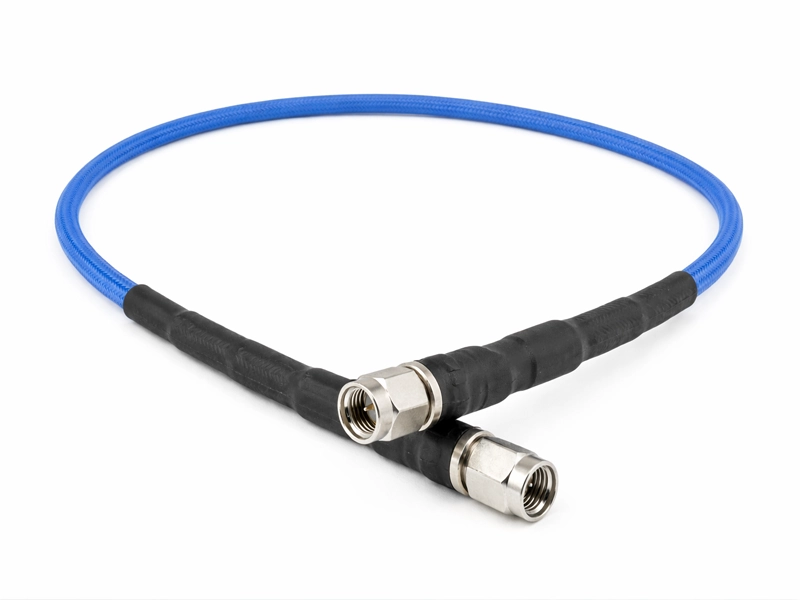
Flexible Low Loss Test Lead
For RF validation and general handling-intensive test paths where softer cable feel and better durability are important.
- Typical fit Bench and general RF validation
- Priority Handling softness
Typical Applications
Radio Equipment Transmission
RF paths inside radio equipment where controlled attenuation and softer cable routing both matter.
Mobile Device Signal Transmission
Signal paths in compact or portable equipment where routing space is limited and installed cable handling matters.
Compact RF Interconnect Systems
Subsystem links requiring lower attenuation than general-purpose flexible cable, but where the routing envelope cannot support a larger low-loss platform.
General Dynamic RF Assemblies
Installed RF or microwave assemblies that experience repeated movement, tighter bend conditions, or more demanding routing paths.
Flexible Low Loss Cable FAQ
What defines a flexible low loss RF cable?
A flexible low loss RF cable combines low attenuation characteristics with high physical flexibility, typically utilizing a Polyurethane (PUR) jacket to allow for dynamic routing and repeated bending in applications where softer cable handling and mechanical flexibility are important.
PUR vs. FEP jacket: Which should I specify?
Specify the PUR-jacketed VXS series for applications requiring dynamic routing and flexibility within a -55°C to +85°C range. For static installations, higher temperature environments up to +165°C, or more transmission-priority applications, specify the FEP-jacketed VXL series.
How does dynamic bend radius affect cable selection?
Dynamic bend radius is a design screening parameter for repeated movement and installation planning. Constraining movement at or above this radius helps support shielding integrity and impedance consistency during repeated movement and installed routing use.
Are VXS cables suitable for phase-critical applications?
VXS cables are optimized for low loss and flexibility, not strict phase tracking. If phase consistency over temperature or bending is the main design concern, evaluate our Phase-Stable Flexible Cable family.
How do I choose between the S50, S73, and S100 models?
The S50 is optimal for compact layouts requiring a smaller diameter and higher frequency reach. The S73 provides a balanced routing platform for medium-duty interconnects. The S100 is selected for longer flexible runs where achieving lower attenuation is more critical than minimizing cable size.
Can Vinstronics provide terminated flexible low loss cable assemblies?
Yes. We support flexible low loss assemblies with selected interfaces, defined lengths, and routing-oriented configuration support.
Related Flexible Cable Families
Explore adjacent flexible cable families built around different engineering priorities.
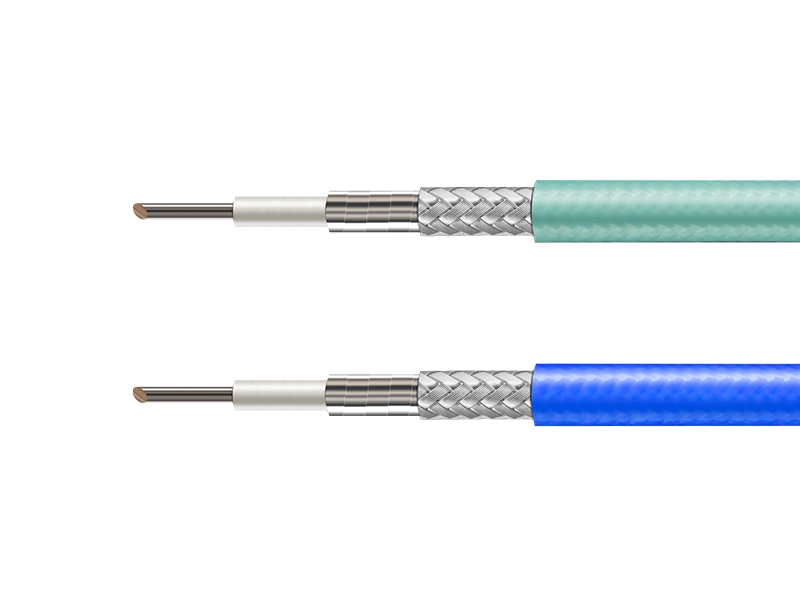
Low Loss Cable
For applications when attenuation reduction and broader transmission capability matter more than dynamic flexibility.

Ultra-Flexible RF Cable
For applications when cable softness and tighter bend handling matter more than lower attenuation.
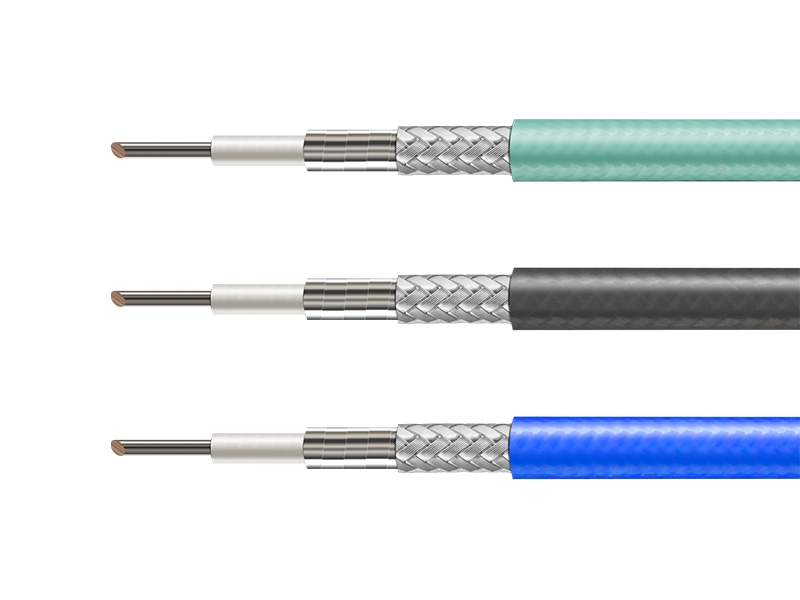
Phase-Stable Flexible Cable
For applications where phase consistency matters more than routing softness.

High Power RF Cable
For transmitter paths when power handling and thermal behavior dominate model selection.
Flexible Low Loss Cable Specification Guide
Download the technical datasheet to review complete attenuation data and mechanical limits.
Discuss Your Flexible Low Loss Requirement
Our engineering team can help evaluate whether the VXS series provides the right balance of low attenuation and flexibility for your system, including bend planning, movement constraints, connector compatibility, and custom cable assembly definition.
- • Operating frequency range
- • Approximate cable length
- • Minimum static or dynamic bend radius
- • Expected movement or bend condition
- • Connector interface requirement