
Flexible RF
Coaxial Cables
Flexible cable families engineered for low-loss transmission, phase-stable routing, and compact interconnects.
Designed specifically for routed paths where rigid or semi-rigid constructions are impractical. Select the optimal cable architecture based on your application needs.

What is a Flexible RF Cable?
A microwave interconnect designed for routed paths facing spatial constraints or continuous motion. It provides necessary bendability while maintaining controlled impedance and signal integrity.
Why Different Families Exist
No single cable can maximize every parameter simultaneously. Distinct flexible families are purpose-built to prioritize metrics like phase stability, low loss, or ultra-flexibility for specific routing applications.
Explore Flexible Cable Families
Select the configuration that best aligns with your primary engineering requirement.
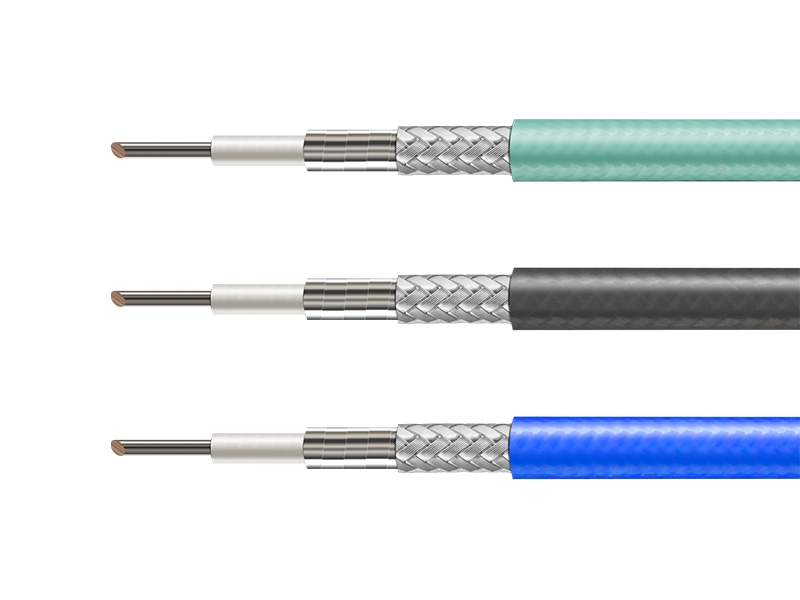
Phase-Stable Flexible Cable
Engineered for phase-sensitive microwave routing, VNA metrology setups, and precision interconnects.
- Primary Strength Phase Repeatability
- Max Frequency Up to 128 GHz
- Best For VNA & Precision RF

High-Power RF Cable
Built for robust signal delivery in demanding transmitter and broadband amplifier applications.
- Primary Strength High-Power Handling
- Max Frequency Up to 35 GHz
- Best For Amplifier Feeds
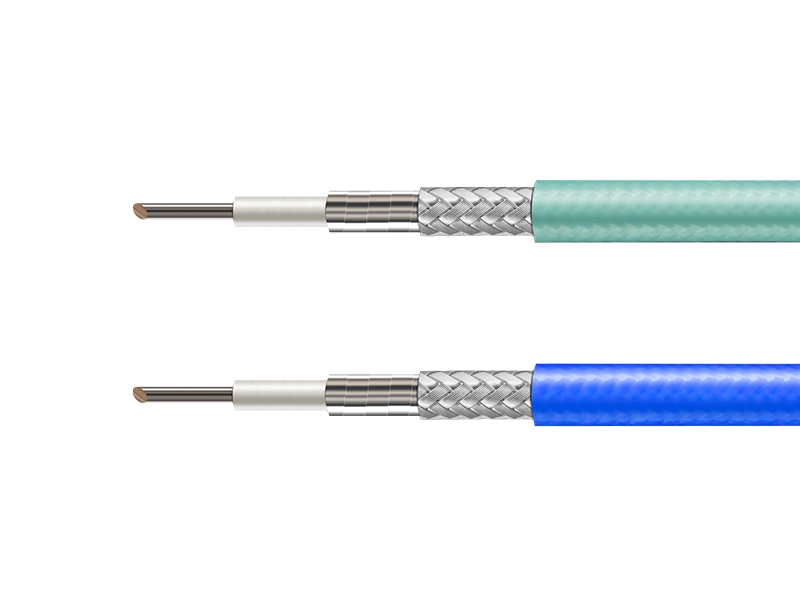
Low Loss Cable
A versatile broadband family optimized for attenuation-sensitive microwave routing.
- Primary Strength Low-Loss Routing
- Max Frequency Up to 43 GHz
- Best For Broadband Routing
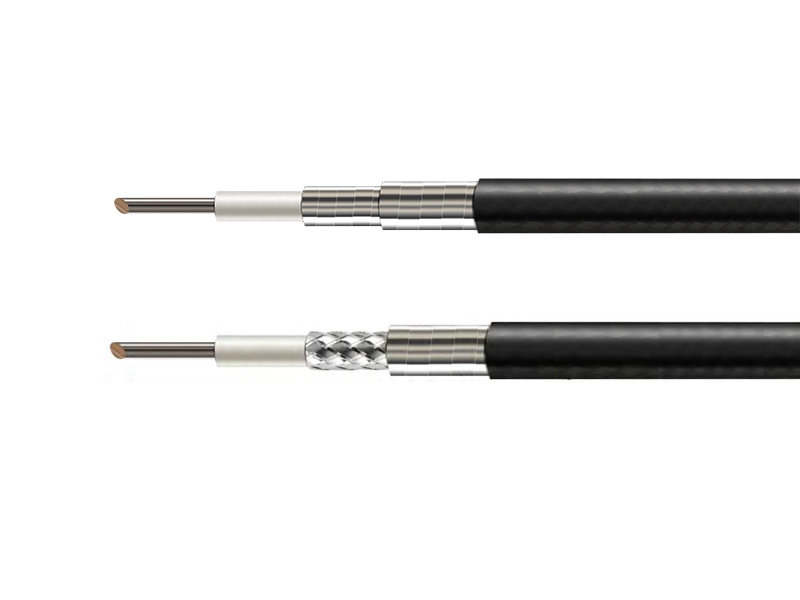
Flexible Low-Loss Cable
Designed for wireless systems requiring structural flexibility without compromising insertion loss.
- Primary Strength High Flex Durability
- Max Frequency Up to 37 GHz
- Best For Repeated Routing

Ultra-Flexible RF Cable
Engineered for extreme mechanical resilience in dense cabinets with very tight bend radiuses.
- Primary Strength Tight Bend Performance
- Max Frequency Up to 50 GHz
- Best For Dense Layouts
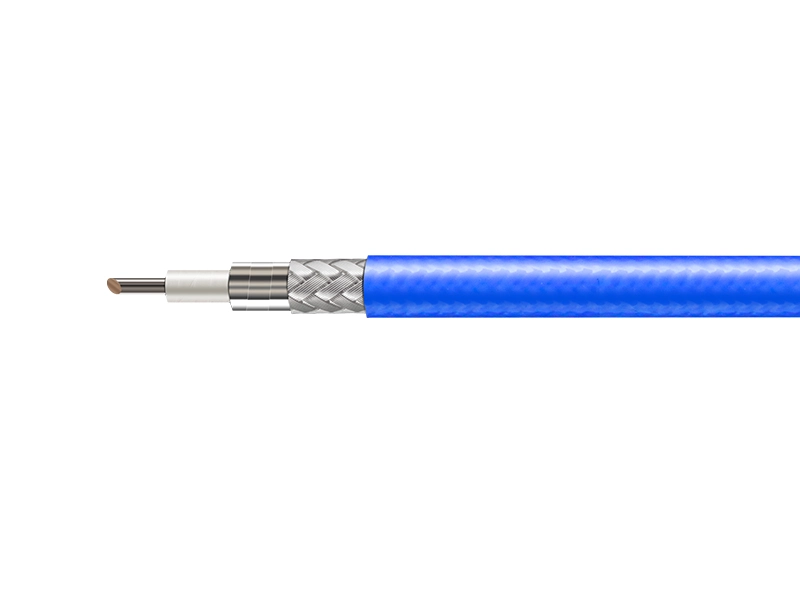
General Purpose Flexible Cable
The versatile standard for internal microwave routing, offering balanced electrical performance.
- Primary Strength Balanced Performance
- Max Frequency Up to 110 GHz
- Best For Cabinet Interconnects
Representative Assemblies
Purpose-built flexible assemblies engineered for demanding test, routing, and compact interconnect applications.
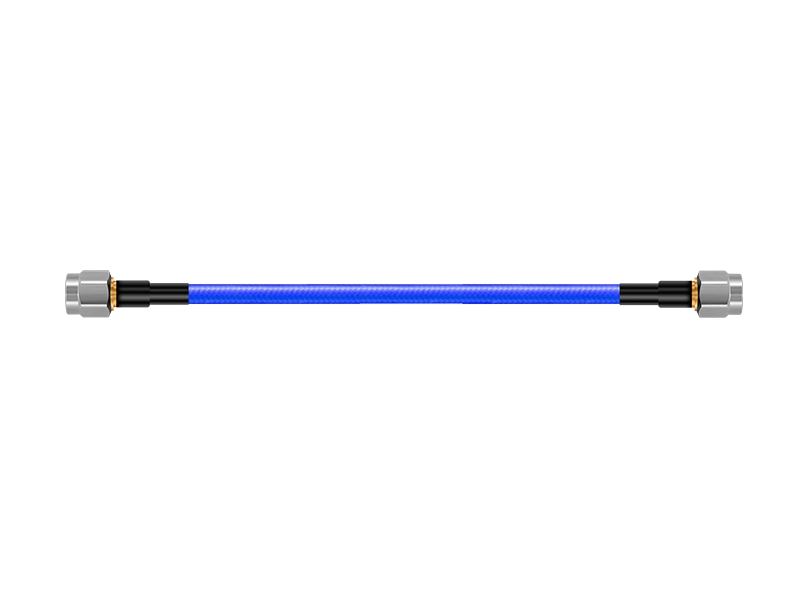
Phase-Stable Test Assembly
Factory-terminated with precision 2.92mm connectors for VNA and metrology applications.
Request Quote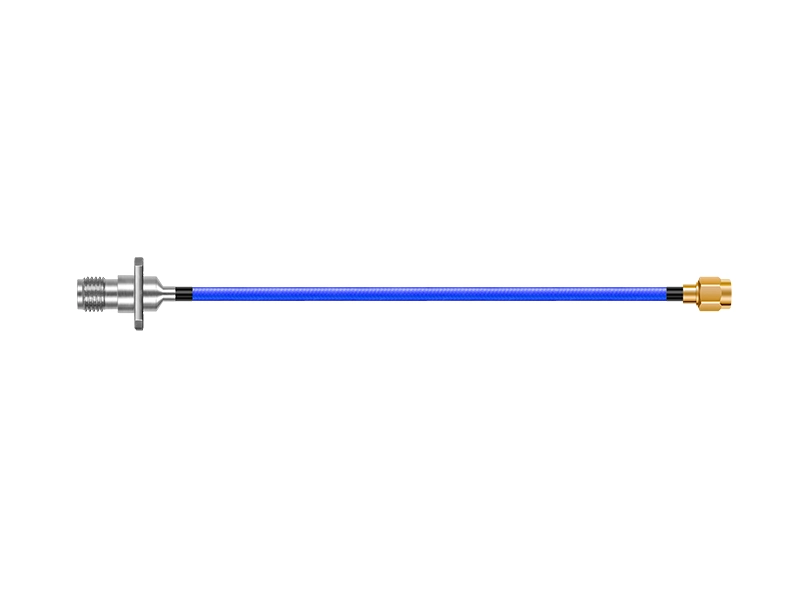
Low-Loss Broadband Assembly
Optimized for attenuation-sensitive microwave routing up to 43 GHz with SMA interfaces.
Request Quote
Ultra-Flexible Test Assembly
Stranded center conductor design built for dense layouts and repeated handling.
Request QuoteSupport Beyond Standard Catalog Options
Custom Routing Lengths
Precision-cut assemblies tailored for exact spatial constraints and dense enclosures.
Factory-Installed Interfaces
Terminated with specific RF connectors including SMA, 2.92mm, SMP, and more.
100% Performance Tested
Every assembly is factory-verified for VSWR and insertion loss before shipment.
Engineering Support
Expert recommendations for bend radius limits, phase matching, and thermal margins.
Typical Applications
VNA & Metrology Routing
Phase-stable assemblies ensure highly repeatable measurement paths during calibration and testing.
Semiconductor ATE Validation
Flexible architectures support dense test fixtures and frequently handled device probing paths.
5G / 6G & SATCOM Links
Low-loss cables preserve signal integrity across demanding high-frequency communication networks.
Aerospace & Defense Electronics
Ruggedized, phase-consistent cables support phased array radars and avionics in harsh environments.
Automation & Robotic Motion
Ultra-flexible constructions manage repeated dynamic flexure to prevent mechanical failure.
Cabinet & Module Interconnects
General-purpose cables serve as the economical standard for internal chassis wiring in restricted volumes.
Flexible RF Cable FAQ
What is a flexible RF coaxial cable?
It is a microwave interconnect for routed paths where rigid cable is impractical. It supports tighter bends and compact layouts while preserving signal integrity.
What is the difference between flexible RF and semi-rigid cables?
Semi-rigid cables offer superior dimensional stability for fixed installations. Flexible cables provide the necessary bendability for dynamic environments and complex routing.
Which flexible cable family is best for low loss?
The Low-Loss Flexible Cable family is optimized for attenuation-sensitive broadband routing, providing enhanced signal preservation across complex interconnect paths.
When should I choose a phase-stable flexible cable?
Select this family when maintaining phase repeatability across temperature shifts or mechanical movement is critical, such as in VNA metrology or phased arrays.
Why is cable bend radius important for flexible RF cables?
Static bend radius is the absolute minimum for a fixed installation, while dynamic radius applies to repeated flexure. Exceeding these limits permanently damages the dielectric and alters system impedance.
Can Vinstronics provide connector-installed cable assemblies?
Yes. We provide factory-terminated custom assemblies matching specific RF interfaces, exact lengths, and armoring options, fully verified for performance.
Flexible RF Cable Selection Guide
Download the comprehensive family overview and indicative performance matrix for offline reference (PDF).
Discuss Your Cable Routing Requirement
Our engineering team is ready to recommend the optimal flexible cable configuration for your system. We assist with bend radius calculations, connector matching, and phase-stable custom builds.
Typical inputs: frequency range, cable length, bend constraint, connector type
Request an Engineering Recommendation