Many RF cable requests start with the same sentence: “We need a low-loss cable.”
Sometimes that is exactly right. In a long RF path, insertion loss can become the main problem. But in many high-frequency test setups, the real issue is not only how much signal is lost. It is whether the measurement remains repeatable after the cable is moved, bent, handled or exposed to temperature change.
That is where the difference between low loss RF cable and phase-stable flexible cable becomes important.
Engineer’s Selection Problem
The decision is not simply “which cable has lower attenuation?” The better question is whether the application is limited by signal level, measurement drift, bending behavior, temperature change, handling frequency or the complete cable assembly requirement.
Short answer: Low loss protects signal level. Phase stability protects measurement repeatability. Choose low loss RF cable when attenuation and link budget are the main concerns. Choose phase-stable RF cable when VNA repeatability, phase drift, movement, bending or temperature change affects the result. In some high-frequency test systems, both low loss and phase stability must be reviewed together.
This guide compares low loss RF cable and phase stable RF cable from an engineering selection perspective. It is written for RF test engineers, microwave system designers, lab engineers and sourcing teams who need to select RF test cables or RF cable assemblies for high-frequency systems.
Low Loss and Phase Stability Solve Different Problems
Low loss and phase stability are often discussed together because both affect RF cable performance. But they do not solve the same problem.
Low loss focuses on reducing attenuation through the cable. It matters when the signal level must be preserved over the cable length and frequency range.
Phase stability focuses on keeping the electrical phase behavior repeatable when the cable is moved, bent or exposed to temperature variation. It matters when the measurement result changes because the cable condition changes.
In practical test setups, the wrong decision usually happens when the requirement is described too simply. A cable can have low insertion loss and still be a poor choice for a VNA setup if bending causes phase drift. A phase-stable cable may not be necessary for a fixed system path where attenuation is the dominant concern.
Quick Comparison Table
| Selection factor | Low loss RF cable | Phase stable RF cable |
|---|---|---|
| Main purpose | Reduce signal attenuation. | Reduce phase change caused by movement, bending or temperature variation. |
| Best used when | Signal level and insertion loss are the main concerns. | Measurement repeatability and phase behavior matter. |
| Typical applications | Longer RF paths, system interconnects, equipment routing. | VNA test cables, calibration setups, phased-array testing, repeatable lab measurement. |
| Common risk if selected incorrectly | Signal level may be protected, but measurement repeatability may still drift. | Phase behavior may be stable, but cable loss must still be checked for the frequency and length. |
| What to specify | Frequency range, cable length, loss budget and connector pair. | Frequency range, movement condition, bend condition, temperature range and test repeatability need. |
When Low Loss Matters More
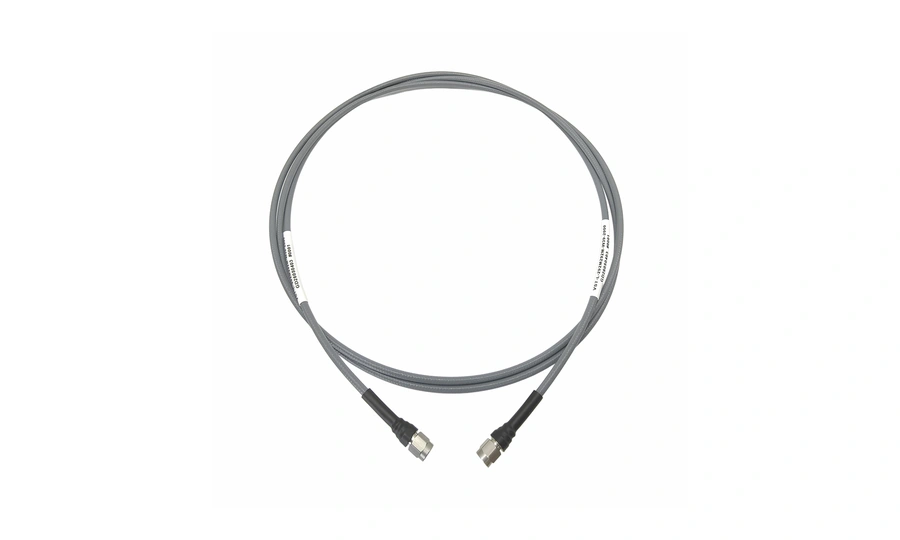
Low loss RF cable should be prioritized when the system is mainly limited by attenuation. This often happens in longer cable runs, distributed RF systems, equipment-level routing or systems where the available signal level is already limited.
Low loss matters more when:
- The cable path is relatively long.
- The operating frequency is high enough that attenuation becomes significant.
- The system has a tight link budget.
- The signal source power is limited.
- The cable is mostly static after installation.
- The application does not require frequent movement during measurement.
In these cases, the engineer usually wants to reduce insertion loss while keeping the assembly practical to route and terminate. The connector pair, cable diameter, bend radius and finished assembly length should still be reviewed together.
Engineering note: Low loss is not a universal answer. A lower-loss cable may be larger, less flexible or less suitable for repeated movement. The cable must still fit the mechanical path and handling condition.
When Phase Stability Matters More
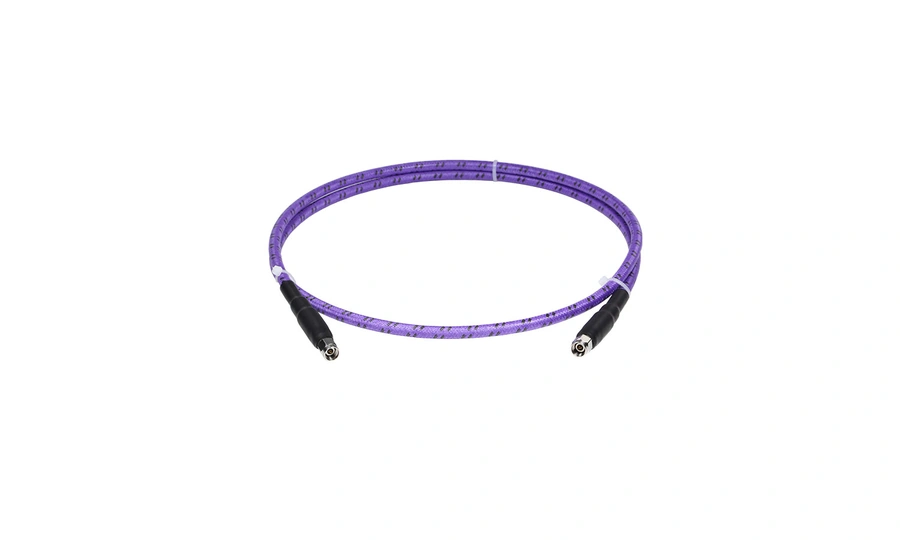
Phase-stable RF cable should be prioritized when the result changes because the cable condition changes. This is common in test environments where cables are moved, bent, reconnected, recalibrated or exposed to temperature variation.
Phase stability matters more when:
- The cable is used with a VNA or precision test setup.
- The setup is calibrated and then handled or repositioned.
- The test result is sensitive to phase variation.
- The cable is repeatedly flexed during use.
- Temperature change affects measurement behavior.
- Repeatability matters more than a single static loss value.
In these applications, selecting only by low insertion loss can miss the real problem. The cable may look acceptable on a datasheet, but the measurement may still shift after movement or bending.
Why VNA and Repeatable Test Setups Often Need Phase Stability
In a VNA setup, the cable is not just carrying the signal. It is part of the calibrated measurement path. Once the system is calibrated, movement of the test cable can change the measurement condition.
That is why phase-stable test cables are often used for:
- VNA test benches
- Calibration and verification setups
- Repeated DUT connection and disconnection
- Phased-array or multi-channel testing
- Temperature-sensitive measurement environments
- Production test where repeatability matters
The key question is not whether the cable performs well when it is new and straight. The key question is whether it remains repeatable after normal test handling.
When You Need Both Low Loss and Phase Stability
Some RF test cable assemblies need both low insertion loss and stable phase behavior. This is common when the system operates at higher frequencies, uses longer cable paths and still requires repeatable measurement after movement.
You may need both when:
- The frequency range is high and the cable length is not short.
- The cable is used in VNA testing or calibration.
- The cable is moved during normal use.
- The measurement is sensitive to both amplitude and phase.
- The setup is used repeatedly in lab or production conditions.
In these cases, the cable assembly should be reviewed as a complete interconnect path. Connector type, cable length, bend radius, test requirements and expected handling all affect the final selection.
Cable Assembly Selection by Application
| Application | What usually matters more | Selection note |
|---|---|---|
| Longer equipment-level RF path | Low loss | Insertion loss and cable length should be reviewed first. |
| VNA test cable | Phase stability | Repeatability after movement is often more important than static loss alone. |
| Production test station | Phase stability and durability | Handling, mating cycles and test repeatability should be considered together. |
| Fixed internal RF routing | Loss and mechanical fit | Cable type, bend radius and routing space are important. |
| Phased-array or multi-channel testing | Phase stability | Phase repeatability across movement or temperature change may drive the selection. |
Common Selection Mistakes
| Mistake | Why it causes problems | Better approach |
|---|---|---|
| Choosing the lowest-loss cable automatically | The cable may still create measurement drift after movement. | Check whether the application is loss-limited or repeatability-limited. |
| Ignoring bend condition | Bending can affect both mechanical life and electrical behavior. | Specify static routing, repeated bending or daily handling. |
| Using datasheet loss as the only decision point | Static loss does not show phase behavior after movement or temperature change. | Review insertion loss, phase stability and use condition together. |
| Requesting a cable without test requirements | The inspection scope may not match the actual measurement need. | Define VSWR, insertion loss, return loss or phase-related needs before quotation. |
What to Specify Before Requesting a Cable Recommendation
Before requesting a cable or finished cable assembly recommendation, provide as much application detail as possible.
- Connector pair and gender
- Frequency range
- Cable length
- Insertion loss target if known
- Whether phase stability matters
- Static or repeated bending condition
- Temperature range if relevant
- VNA, production test, module routing or system interconnect application
- VSWR, return loss, insertion loss or other test requirements
- Quantity and expected lead time
If the cable will be built as a finished assembly, this custom RF cable assembly specification checklist can help organize the RFQ before submission.
For broader assembly selection, see the RF Cable Assemblies Guide. For cable family information, review Vinstronics RF coaxial cable options.
How Vinstronics Reviews Low Loss and Phase Stable Cable Requirements
Vinstronics reviews RF cable and cable assembly requirements based on the complete use condition, not only a cable name. The selection may depend on frequency range, cable length, connector pair, insertion loss target, phase stability requirement, routing condition and test data requirement.
For a static system interconnect, low loss may be the primary concern. For a VNA test cable or repeatable measurement setup, phase stability may be the more important requirement. For high-frequency cable assemblies, both may need to be reviewed together with connector type and mechanical routing.
Related product families include low loss RF coaxial cable, phase-stable flexible cable and custom RF cable assemblies.
FAQ
Is low loss RF cable always better?
No. Low loss cable is better when attenuation and link budget are the main concerns. If the cable is used in a repeatable measurement setup, phase stability may matter more than the lowest possible insertion loss.
What is phase stable RF cable used for?
Phase stable RF cable is used when phase repeatability matters, especially in VNA testing, calibration setups, phased-array testing, production test and applications where cable movement or temperature change can affect results.
Can a cable be both low loss and phase stable?
Yes, some cable assemblies may need both low insertion loss and stable phase behavior. The final choice depends on frequency range, cable length, movement condition, temperature range and test requirements.
Which cable is better for VNA testing?
For VNA testing, phase stability is often more important than static insertion loss alone because the cable is part of the calibrated measurement path. The best cable still depends on frequency range, length, connector type and handling condition.
What should I specify when requesting a low loss or phase stable cable assembly?
Provide connector pair, frequency range, cable length, cable type preference, movement or bend condition, test requirements and application. If the cable is used in a fixture or module, a drawing or installation photo can also help.
Need help choosing between low loss and phase stable RF cable?
Send your connector pair, frequency range, cable length, routing condition and test requirement. Vinstronics can review whether low loss, phase stability or a combined cable assembly approach is more suitable for your RF path.