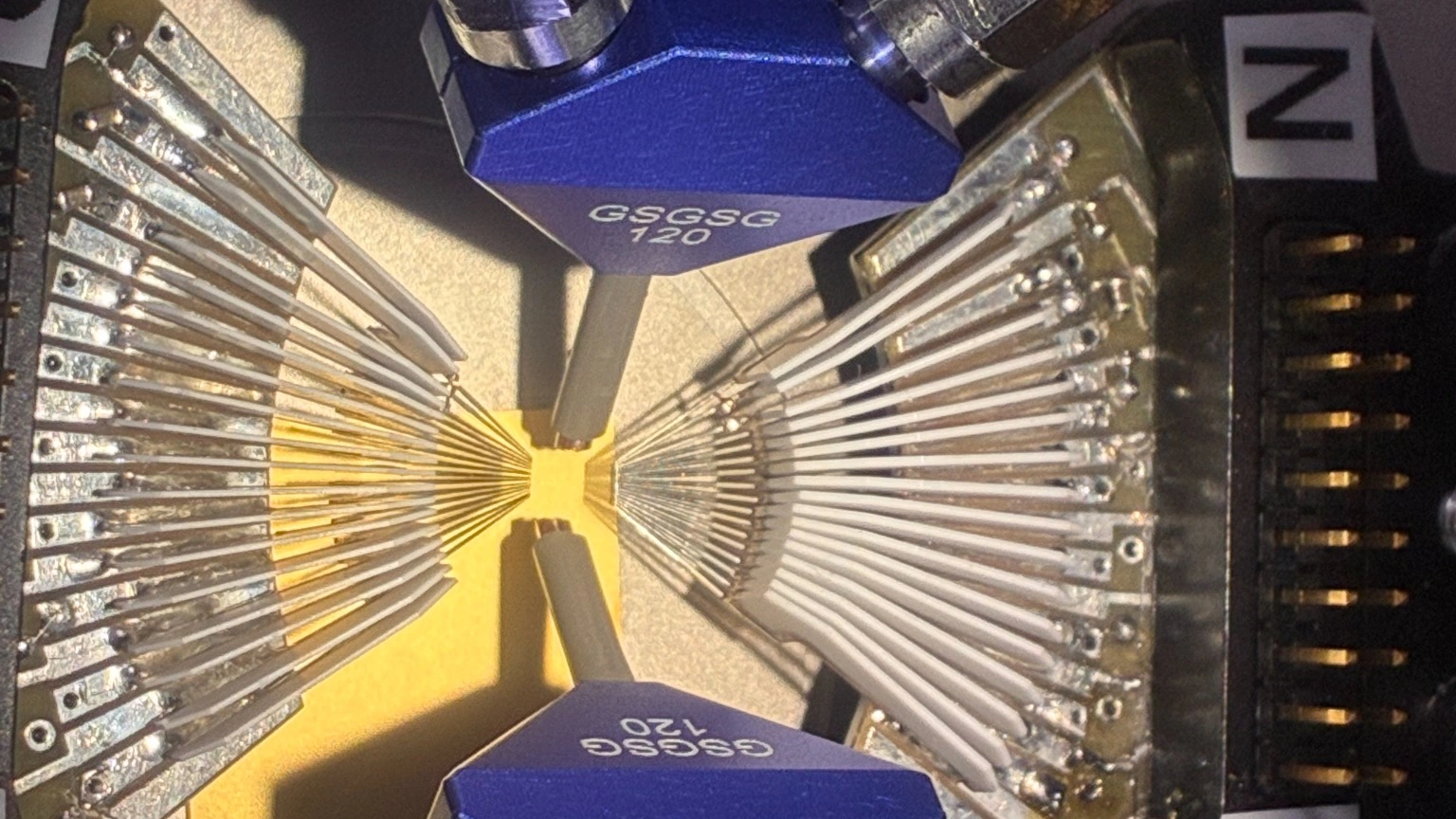
In the realm of modern electronics, microwave measurements play a pivotal role in advancing communication technologies, semiconductor testing, and high-frequency device characterization. The ability to accurately measure and analyze high-frequency signals is crucial for optimizing performance and ensuring reliability. Among various probing technologies, the GSSG (Ground-Signal-Signal-Ground) probe has emerged as a powerful tool, offering unique advantages for high-frequency measurements. This article aims to delve into the intricacies of GSSG probe technology, exploring its structure, calibration techniques, performance optimization, and practical applications.

Structure and Working Principles of GSSG Probe
Basic Structure of GSSG Probe
The GSSG probe is a specialized tool designed for high-frequency measurements, particularly in the microwave and millimeter-wave range. Unlike traditional GSG (Ground-Signal-Ground) probes, the GSSG probe features an additional signal line, which enhances its ability to handle differential signals and improves measurement accuracy. The geometry of the GSSG probe is carefully engineered to minimize signal loss and interference while ensuring robust mechanical stability.
The key components of a GSSG probe include the ground lines, signal lines, and the probe tip. The ground lines provide a stable reference for signal measurements, while the signal lines are designed to efficiently transmit high-frequency signals. The probe tip is typically made from high-quality materials such as gold or platinum to ensure low contact resistance and durability.
Working Principles
The GSSG probe operates by establishing a secure and stable connection between the device under test (DUT) and the measurement equipment. When a high-frequency signal is applied, the probe’s structure ensures that the signal is transmitted with minimal distortion. The electromagnetic fields within the probe are carefully managed to prevent crosstalk and other forms of interference. This precise control of signal transmission is what makes the GSSG probe an essential tool for accurate and reliable microwave measurements.

Calibration Techniques for GSSG Probe
Importance of Calibration
Calibration is a critical step in ensuring the accuracy and reliability of microwave measurements. Proper calibration of GSSG probes can significantly reduce measurement errors and improve the overall performance of the measurement system. Inaccurate calibration can lead to erroneous data, which may have far-reaching implications in research and development.
Comparison of 15-Term and 7-Term Error Models
Two common error models used in the calibration of GSSG probes are the 15-term and 7-term error models. The 15-term error model is more comprehensive and accounts for a wider range of potential errors, including those related to the probe’s mechanical and electrical characteristics. In contrast, the 7-term error model is simpler but may not capture all the nuances of the measurement process.
The 15-term error model offers several advantages over the 7-term model. It provides a more accurate representation of the measurement environment, leading to higher precision in the final results. This enhanced accuracy is particularly important in high-frequency applications where small errors can have significant impacts.
Key Factors in Calibration Process
Several factors can influence the success of the calibration process. The choice of calibration standards is crucial, as these standards serve as the reference points for the calibration procedure. High-quality standards with well-characterized properties are essential for accurate calibration.
Additionally, the calibration environment can also affect the results. Factors such as temperature, humidity, and electromagnetic interference should be carefully controlled to ensure consistent and reliable calibration outcomes.

Performance Optimization of GSSG Probe
Probe Planarization Techniques
One of the challenges in using GSSG probes is ensuring that the probe tip is perfectly aligned with the device under test. This alignment, known as planarization, is critical for minimizing contact resistance and maximizing signal integrity. A novel approach to probe planarization involves the use of image processing techniques. By analyzing images of the probe tip and the DUT, precise adjustments can be made to achieve optimal alignment.
Proper planarization significantly improves the accuracy of measurements by reducing the variability in contact resistance. This, in turn, leads to more consistent and reliable measurement results.
Optimization of Contact Force
The contact force between the probe tip and the DUT is another important factor that affects measurement performance. Excessive contact force can damage the DUT, while insufficient force can result in poor electrical contact. Optimizing the contact force requires careful consideration of the probe’s mechanical design and the properties of the DUT.
Advanced probe designs incorporate features that allow for precise control of contact force. These designs often use spring-loaded mechanisms or other innovative solutions to ensure consistent and optimal contact force during measurements.
Enhancing Dynamic Range
Dynamic range is a critical parameter in high-frequency measurements, as it determines the range of signal amplitudes that can be accurately measured. Techniques for enhancing the dynamic range of GSSG probes include optimizing the probe’s electrical characteristics and improving the calibration process.
Compared to traditional calibration methods, advanced techniques such as the 15-term error model can significantly improve the dynamic range of GSSG probes. This enhanced dynamic range allows for more accurate measurements over a wider range of signal amplitudes, making the GSSG probe a versatile tool for various applications.
Applications of GSSG Probe
Millimeter-Wave and Submillimeter-Wave Measurements
The high-frequency capabilities of GSSG probes make them ideal for millimeter-wave and submillimeter-wave measurements. In recent years, the development of W-band GSSG probes has opened up new possibilities for characterizing high-frequency devices and components.
These probes are designed to operate in the W-band frequency range, which is critical for applications such as 5G and 6G communications, radar systems, and high-speed data transmission. The use of GSSG probes in these applications has demonstrated significant improvements in measurement accuracy and efficiency compared to traditional probing techniques.
Integrated Circuit Testing
Another important application of GSSG probes is in the testing of integrated circuits (ICs). At the wafer level, accurate and reliable testing is essential for identifying defects and ensuring the performance of ICs. GSSG probes offer several advantages in this context, including their ability to handle differential signals and their high measurement accuracy.
Real-world examples have shown that GSSG probes can significantly improve the efficiency and accuracy of IC testing. By providing precise measurements at the wafer level, GSSG probes help to identify and address issues early in the manufacturing process, reducing costs and improving overall product quality.

Future Trends and Developments in GSSG Probe Technology
Impact of New Materials and Manufacturing Techniques
Advancements in materials science and manufacturing technology are poised to have a significant impact on GSSG probe development. For example, the use of micro-metal additive manufacturing techniques allows for the creation of probes with more complex geometries and improved mechanical properties.
New materials, such as advanced alloys and composites, offer enhanced electrical and mechanical characteristics. These materials can improve the performance of GSSG probes by reducing signal loss, increasing durability, and enhancing overall measurement accuracy.
Challenges and Opportunities in High-Frequency Measurements
As the demand for higher-frequency measurements continues to grow, GSSG probe technology will need to evolve to meet these challenges. Future developments may focus on further enhancing the dynamic range, improving calibration techniques, and optimizing probe designs for even higher frequencies.
The increasing complexity of high-frequency devices and systems presents both challenges and opportunities for GSSG probe technology. By addressing these challenges and leveraging new advancements, GSSG probes will continue to play a vital role in the development and testing of next-generation electronic technologies.
In summary, GSSG probes have emerged as a critical tool in the field of microwave measurements. Their unique structure and advanced calibration techniques enable accurate and reliable measurements in a variety of applications. From millimeter-wave measurements to integrated circuit testing, GSSG probes offer significant advantages over traditional probing methods.
Vinstronics is a leading manufacturer of RF microwave components in China, providing high-quality RF connectors, RF adapters, RF loads, attenuators, RF cable assemblies, RF probes and other products. We provide high performance RF probes, including GS, GSG, GSSG, and GSGSG, DC to 110GHz. If you need, please contact us.