
Semi-Flexible /
Conformable Cable
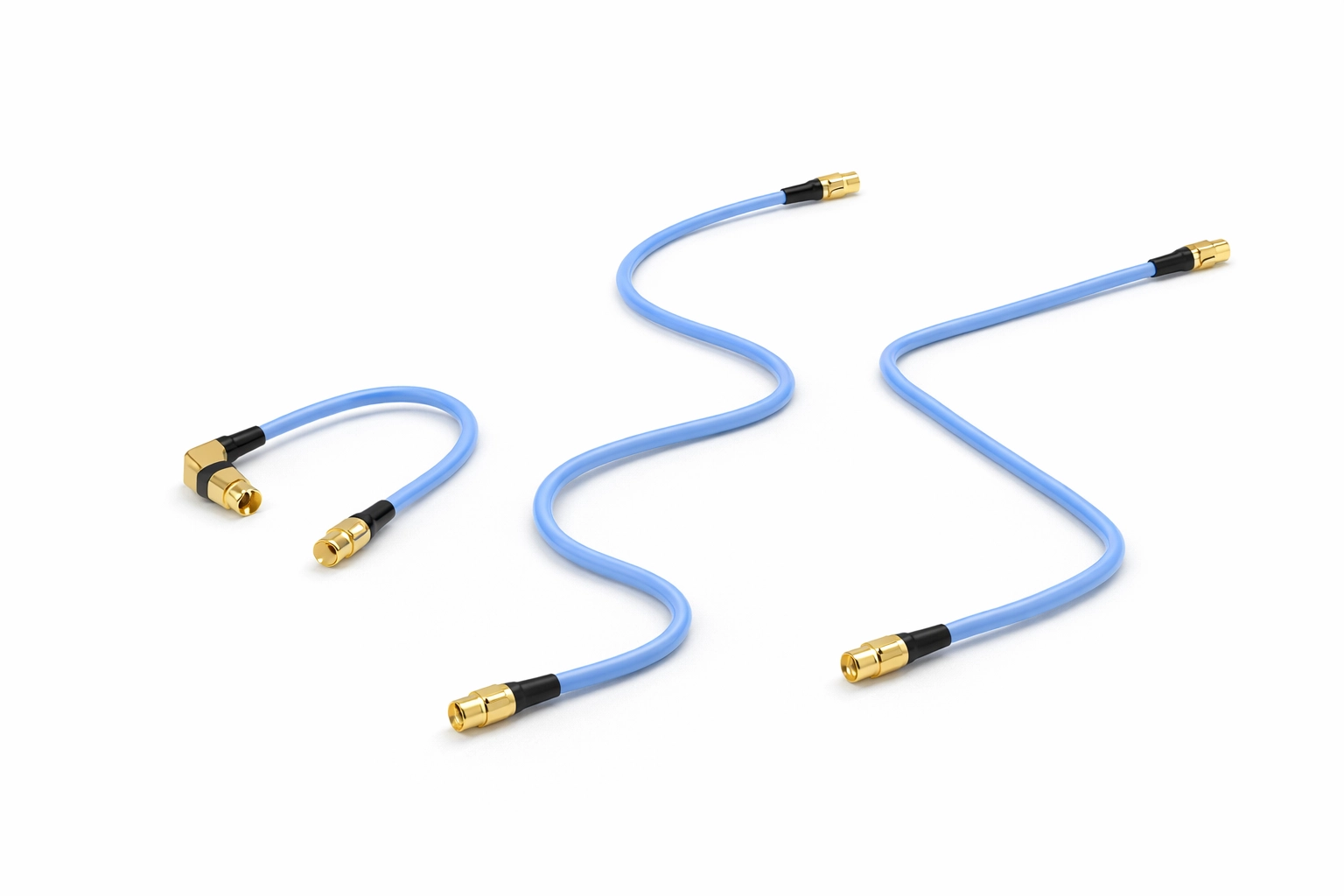
Hand-formable RF coaxial cable for retained-shape routing where semi-rigid is difficult to form, install, or rework.
Designed for fixed routing paths rather than continuous dynamic flexing.
What is Semi-Flexible / Conformable Cable
A retained-shape alternative between semi-rigid and standard flexible cable
Semi-flexible or conformable RF cable is a hand-formable coaxial cable platform that allows routing to be shaped manually and retained after installation. It is commonly used where semi-rigid cable is less convenient to form, install, or rework, while standard flexible cable cannot maintain fixed routing geometry.
Typical applications include RF / microwave module interconnects, dense point-to-point internal connections, test fixture routing, and fixed-shape chassis interconnect paths.
Why choose this family?
Built for shaped routing with retained geometry
Hand-Formable Routing
Allows manual forming for shaped routing without the handling complexity associated with semi-rigid cable.
Retained Geometry
Maintains formed routing paths after installation, supporting fixed-shape interconnect layouts with reduced spring-back.
Consistent Shielding Performance
Braided outer conductor construction supports reliable shielding performance in retained-shape RF routing applications.
Engineering Selection
Engineering Selection Matrix
Use this matrix to compare routing profile, relative loss behavior, minimum bend radius, and application fit across key semi-flexible / conformable cable platforms.
| Series | OD | Relative Flex | Relative Loss | Min. Bend Radius | Best Fit Application | Availability |
|---|---|---|---|---|---|---|
| .047 Series | 1.19 mm | Highest | Higher | 4.0 mm | Space-limited retained-shape routing in compact assemblies | Documented |
| .086 Series — Bare | 2.15 mm | High | Medium | 6.0 mm | Balanced routing and RF performance for general module interconnects | Documented |
| .086 Series — Jacketed | 2.50 mm | Moderate | Medium | 6.0 mm | Protected retained-shape routing for more robust installation handling | Documented |
| .141 Series | 3.58 mm | Low | Lower | 8–10 mm | Lower-loss larger-platform routing for project-defined interconnect paths | Documented |
| .250 Series | 6.30 mm | Lowest | Lowest | 30–60 mm | Large-platform lower-attenuation routing for trunk-style interconnect paths | Documented |
.047 Platform
For space-limited routing where tight bend radius and compact retained-shape geometry are required.
.086 Platform
Balanced solution for module interconnects with practical routing flexibility, manageable bend radius, and broad general-use fit.
.141 Platform
Lower-loss option for larger project-defined routing paths where size is less constrained and attenuation becomes more important.
.250 Platform
Best for trunk routing and larger system layouts where lower attenuation matters more than compact cable size.
Platform information shown here is intended for family-level comparison only. Final electrical and mechanical specifications depend on exact cable construction, configuration, and part number.
Representative Assemblies
Representative Semi-Flexible Assembly Directions
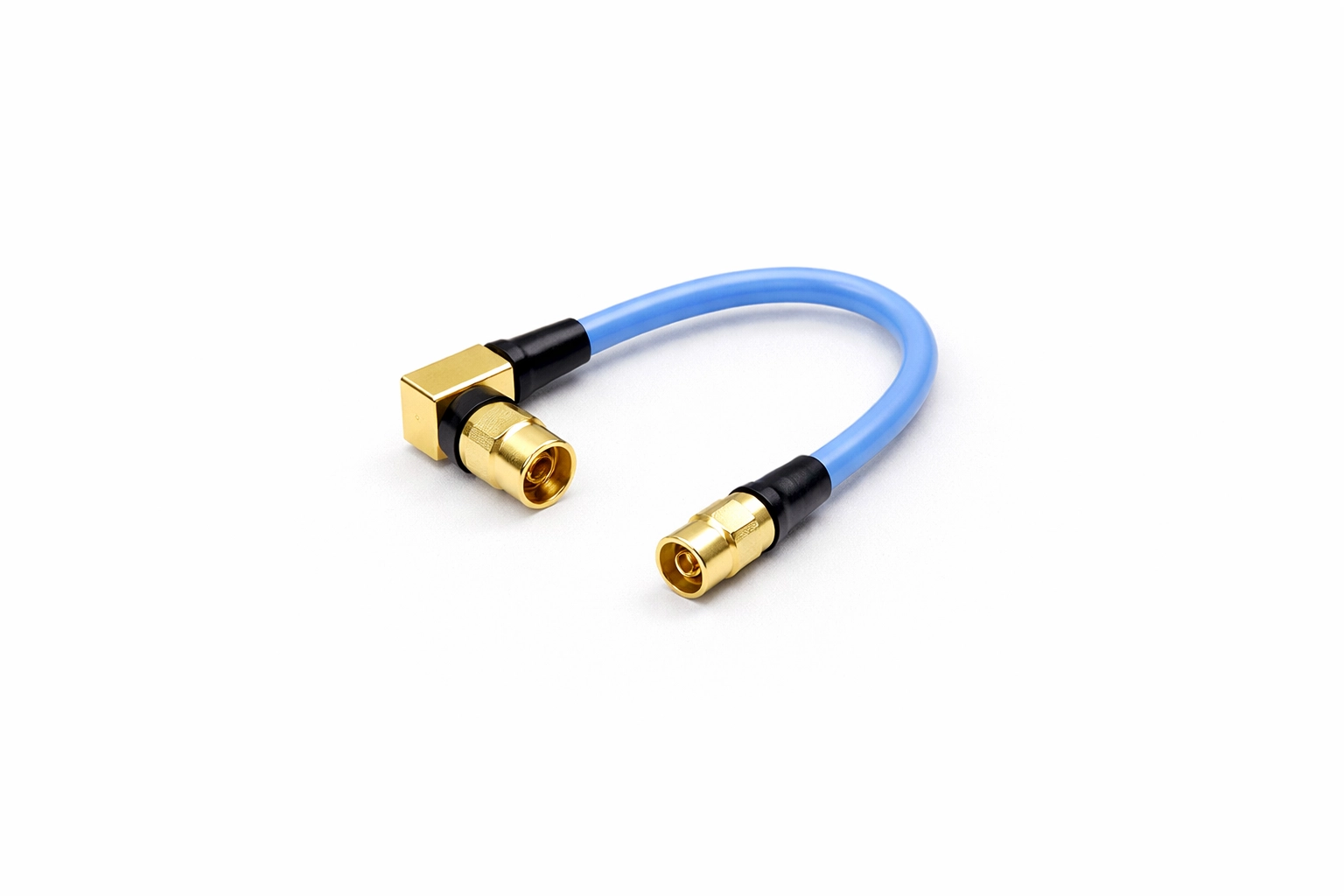
Module Interconnect Routing
Typical with .086 platforms and compact interfaces for dense RF / microwave module layouts where shaped routing must be retained after installation.
Ask Engineering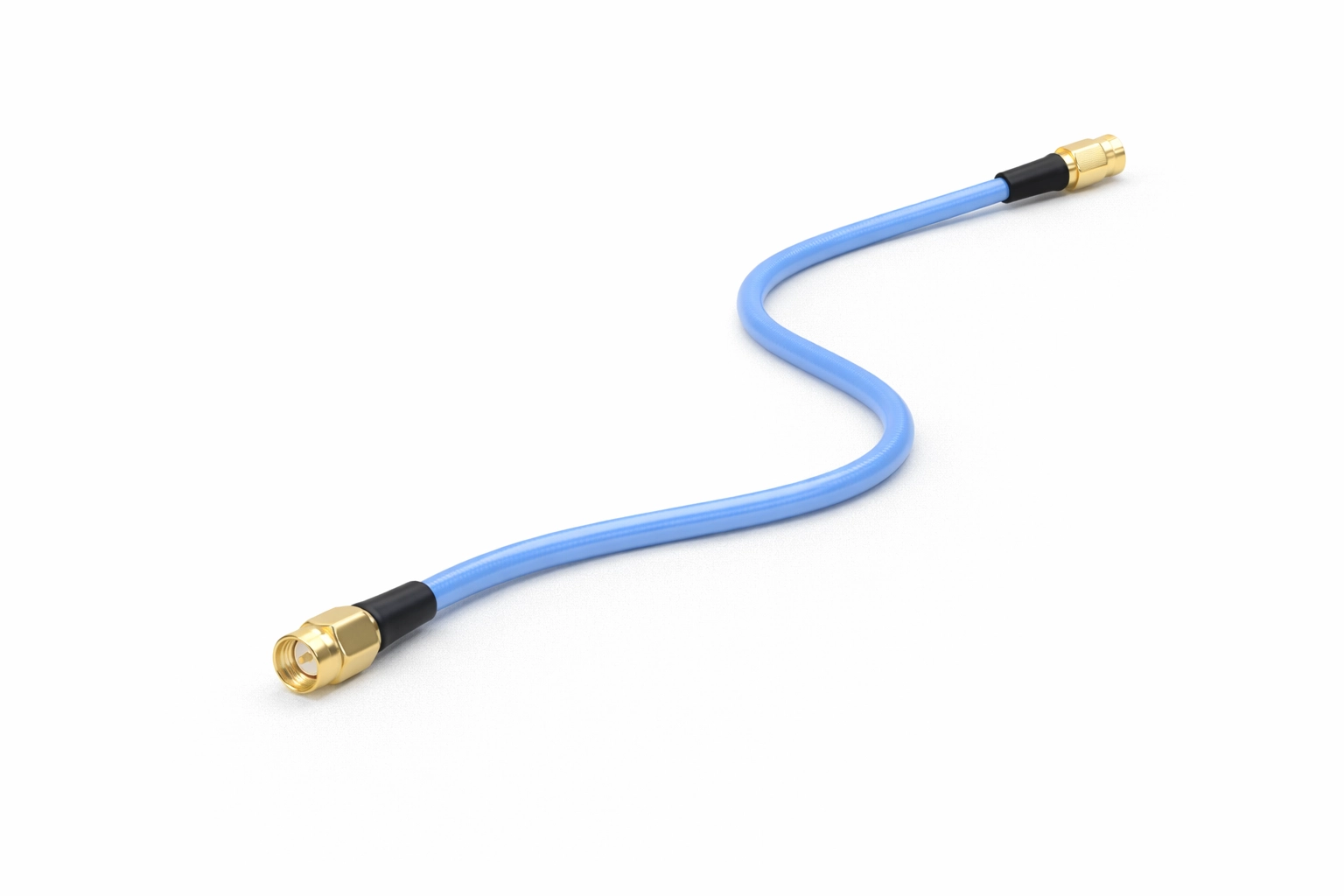
Test Fixture Routing
Suitable for retained-shape lab paths where routing geometry should stay fixed through setup and validation.
Ask Engineering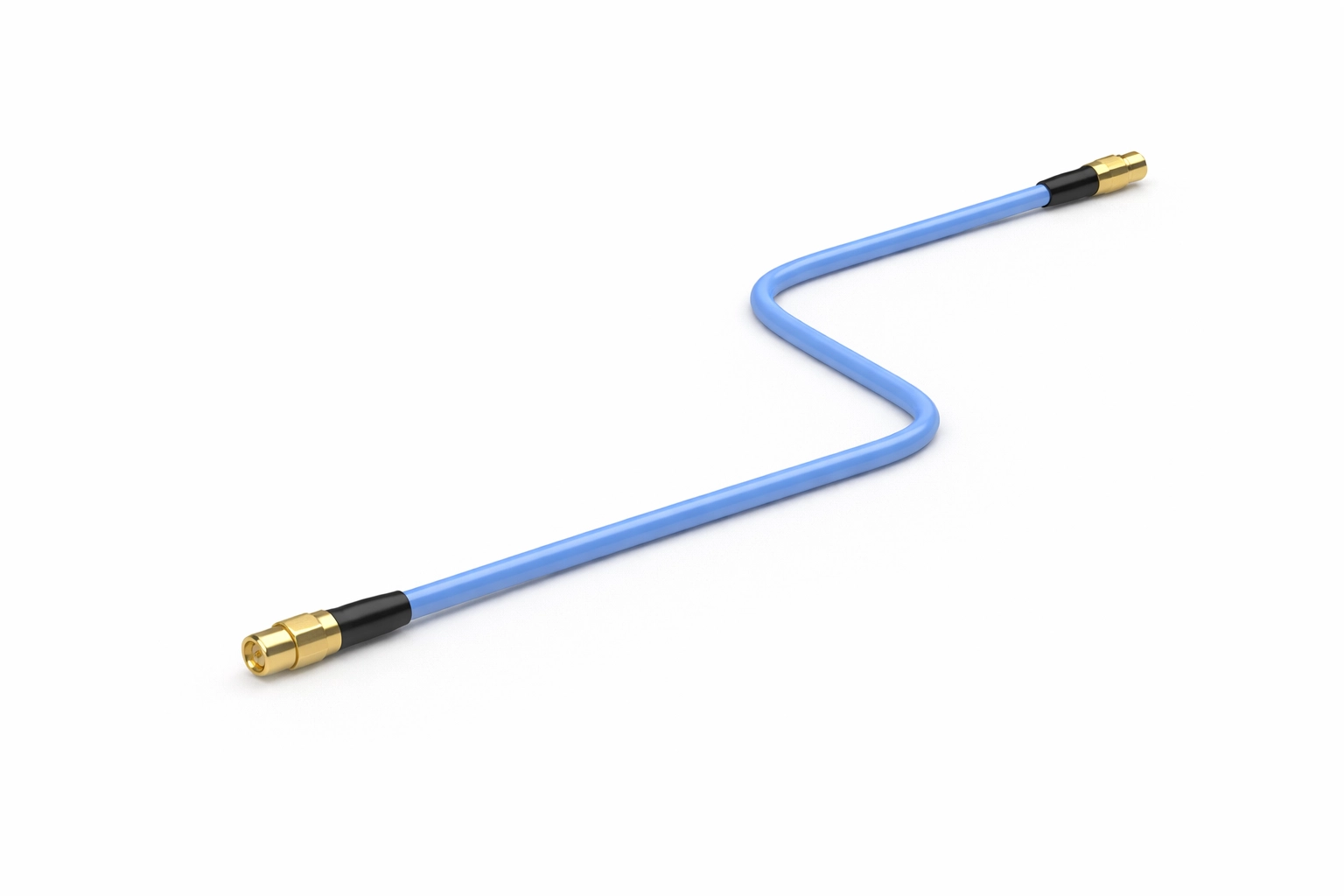
Fixed Chassis Paths
Larger platforms such as .141 and .250 support project-defined internal paths where cable size is acceptable and lower attenuation becomes more important.
Ask EngineeringReference Data
Performance & Construction Reference
Family-level reference information for electrical behavior, construction, and relative platform comparison. Curves shown here are reference guidance for documented .047 and .086 platforms only.
Typical Electrical Reference
Typical Construction Reference
Reference Attenuation Comparison
Family comparison for documented .047 and .086 platforms
Reference CW Power Comparison
Family comparison for documented .047 and .086 platforms
FAQ
Engineering FAQ
What is semi-flexible or conformable RF cable?
+
It is a hand-formable coaxial cable designed for routing paths that must hold their shape after installation.
How is it different from semi-rigid cable?
+
Semi-flexible cable is easier to shape and rework, while semi-rigid cable provides higher rigidity but is harder to adjust during installation.
Can it be used for repeated bending?
+
No. This cable is intended for fixed routing rather than continuous dynamic flexing.
Which size should I choose?
+
Choose .047 for compact routing, .086 for balanced applications, .141 for lower loss, and .250 for larger trunk paths.
Related RF Cable Families
Compare with adjacent cable categories
Semi-Rigid Cable
Better when rigid fixed geometry is required.
Flexible RF Cable
Better for applications requiring repeated movement.
Custom Semi-Flexible Assembly
For project-defined routing and connector configurations.
All RF Cable Families
Compare adjacent cable categories across the full Vinstronics platform.
Define Your Routing Requirement
Tell us the retained-shape path you need to build
Share your cable size preference, minimum bend radius, connector sequence, routing envelope, and operating frequency. Our engineering team can recommend a suitable semi-flexible platform or configured assembly.
- 01Target cable size (.047 / .086 / .141 / .250)
- 02Minimum bend radius or routing envelope
- 03Connector interface on side A / side B
- 04Operating frequency and installation condition