
RF Cable Assemblies
Finished, connectorized RF interconnects built for direct system integration. Choose the right assembly path by routing condition, handling profile, and performance priority.

What Is an RF Cable Assembly?
An RF cable assembly is a finished interconnect built from a selected cable structure and installed RF connectors. Unlike bulk cable, it arrives ready for direct integration into an RF or microwave signal path.
• Finished build: Cable structure and connector terminations are defined as one completed interconnect.
• Ready for installation: The build is supplied for direct integration rather than field termination of raw cable.
• Selected by use condition: Routing profile, handling frequency, and performance priority determine the right structure path.
Why Choose a Finished RF Cable Assembly?
Faster Integration
Reduce installation work with finished interconnects ready for direct use.
Controlled Termination
Connector pairing and cable structure are specified as one completed build.
Tested Before Delivery
Electrical performance can be reviewed before the assembly reaches the installation stage.
Better Fit for Real Routing Conditions
Choose a structure path that matches fixed routing, repeated handling, or added protection needs.
Choose the Right Assembly Structure
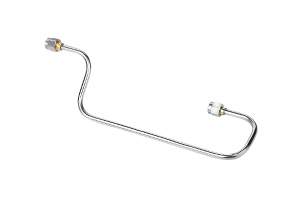
Semi-Rigid Cable Assemblies
Suited for fixed internal routing where the installed path should hold its shape.
Explore Family
Phase-Stable Cable Assemblies
Suited for RF paths where phase consistency matters across movement or temperature change.
Explore Family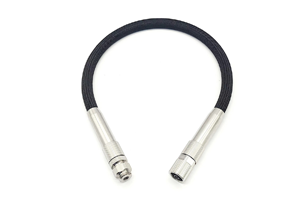
VNA Ruggedized Test Cable Assemblies
Suited for repeated lab handling and measurement workflows.
Explore Family
Armored RF Cable Assemblies
Suited for mechanically exposed routes that need added protection.
Explore FamilyHow RF Cable Assemblies Differ
| Category | What it is | Best used for | Not ideal when |
|---|---|---|---|
| RF Cable Assemblies | Finished, connectorized interconnects ready for direct installation. | System builds where cable structure, connector ends, and routing requirements are already defined. | The cable still needs to be cut, terminated, or adjusted after delivery. |
| Bulk RF Cables | Raw cable supplied without completed connector terminations. | Internal fabrication workflows or projects that still require in-house assembly. | A finished, install-ready interconnect is already required. |
| Precision Test Cables | Flexible measurement cables intended for repeated lab use. | Calibration, bench testing, and frequent handling in measurement environments. | The route is fixed or needs added external protection. |
| Semi-Rigid / Semi-Flexible Cables | Cable architectures usually selected before the final connectorized build is defined. | Fixed internal routing where transmission medium choice comes first. | A completed, finished assembly is already the requirement. |
Which Structure Path Fits Your Build?
| Need / Routing Condition | Best Family | Why | Key Spec to Prioritize | Next Step |
|---|---|---|---|---|
| Fixed internal routing with little or no movement | Semi-Rigid | Best fit when the installed path must hold its shape and stay controlled. | Bend path | Explore Family |
| Phase-sensitive RF path | Phase-Stable | Best fit when phase consistency matters across movement or temperature change. | Phase stability | Discuss Your Build |
| Repeated lab or test handling | VNA Ruggedized | Best fit for frequent bending, reconnect cycles, and measurement workflows. | Flex life | Explore Family |
| Mechanically exposed route | Armored | Best fit when the installed path needs added protection against abrasion or impact. | Mechanical protection | Discuss Your Build |
Where RF Cable Assemblies Are Commonly Used
Test & Measurement
Used for calibration paths, bench measurement setups, and validation workflows.
Aerospace & Defense
Used for installed microwave interconnects in demanding operational environments.
Wireless Infrastructure
Used for RF paths that need stable connectorized routing in radio systems.
Embedded RF Modules
Used for compact internal links where routing control and enclosure space both matter.
Production Validation
Used for repeated test environments where handling consistency affects throughput.
Custom Microwave Builds
Used for projects that need non-standard end combinations, lengths, or structure paths.
Engineering Support
Connector Pairing Support
Confirm the right end interfaces for the build environment.
Structure Recommendation
Narrow the cable structure based on routing and handling conditions.
Length & Routing Guidance
Align the build to bend path, installed length, and access constraints.
Prototype to Production Support
Support early validation builds as well as repeatable production requirements.
Technical FAQ
What is an RF cable assembly?
An RF cable assembly is a finished interconnect built from a selected cable structure and installed RF connectors. It is intended for direct use in an RF or microwave signal path.
How is it different from bulk RF cable?
Bulk RF cable is the transmission medium only. A finished assembly includes completed terminations and is selected around both performance and installation requirements.
How do I choose the right family?
Start with the routing condition first. Choose semi-rigid for fixed paths, phase-stable for phase-sensitive RF paths, ruggedized test assemblies for repeated lab handling, and armored builds for mechanically exposed routes.
Which specs matter most for a quote?
The most important inputs usually include connector interfaces, target frequency range, cable length, and routing condition.
When should I choose armored builds?
Choose armored builds when the installed route needs added protection against abrasion, impact, or harsher mechanical exposure.
What should I provide for a quote?
Share connector A and connector B, target frequency range, cable length, routing condition, and your main performance priority.
Request an Engineering Recommendation
Share the key inputs below and our team can help narrow the right assembly path faster.